

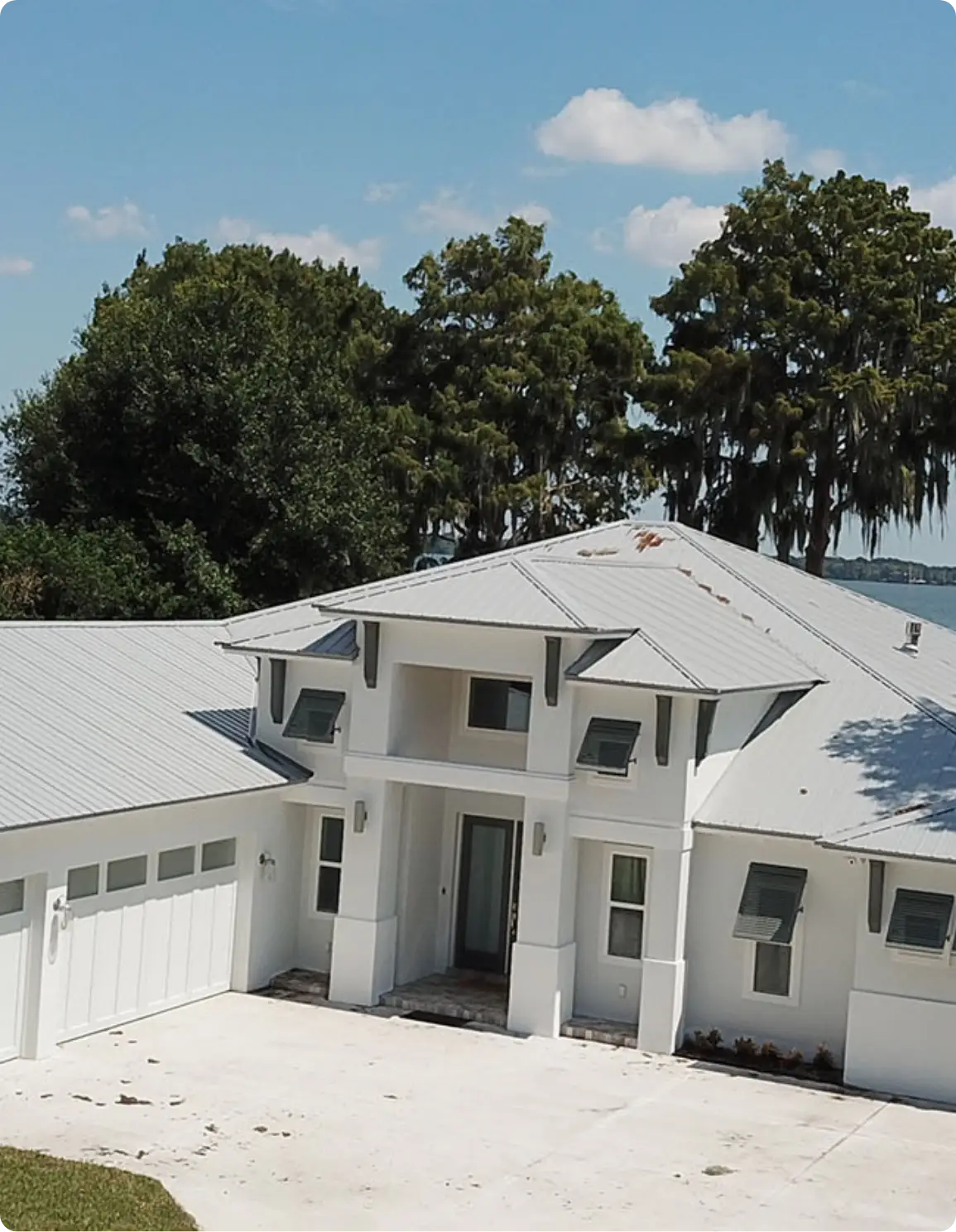
If you're reading this right now, there's a good chance the sky outside your window went from sunny to sideways in about twenty minutes. Welcome to Central Florida in June. The afternoon thunderstorms are back — and this year, they're not easing in gently. Intense wind gusts, marble-sized hail, and sheets of rain are already pounding Clermont and the surrounding communities as we move deeper into the 2026 storm season.
Here's the thing most homeowners don't realize: the storm itself isn't always the most expensive part. What happens — or doesn't happen — in the 48 hours after the storm is often where the real damage compounds. A small leak becomes a soaked attic. Missing shingles let moisture in before you even notice the stain on your ceiling. And if you wait too long to document what happened, your insurance company may have a much easier time underpaying — or denying — your claim.
Place buckets, lay down towels, and move valuables clear of the wet area — but don't enter the attic if you hear dripping near electrical fixtures. Then call us at (407) 229-7669. We offer same-day priority inspections for storm damage and active leaks.
We built Snow & Sons Roofing specifically for moments like this one. Our founder, Crystal Snow, spent 13 years in insurance claims as an adjuster before starting this company. She's sat on the other side of the table. She knows exactly what insurers look for, what they miss on purpose, and what documentation makes the difference between a fair settlement and a frustrating lowball offer. So let's get you through the next 48 hours the right way.
The storm itself isn't always the most expensive part. It's the next 48 hours.
Step 1 — Stay safe first. Your roof can wait a few hours.
We know the instinct. The storm clears, you walk outside, and you immediately want to crane your neck up at the roofline. Totally understandable. But before you do anything, give it a beat. The ground may still be saturated and slippery, fallen branches can hide downed power lines, and metal roofing stays deceptively slick after rain. If there's visible damage to your eaves, fascia, or gutters, directly beneath them is not where you want to be standing.
The good news: you don't need to get on your roof yourself. In fact, we strongly recommend that you don't. A careful visual inspection from the ground is safe, and it genuinely helps your claim — that's what Step 2 is for.
Step 2 — Do a safe ground-level inspection and document everything.
Once it's safe to walk outside, your phone camera is your best tool. Before you touch a single thing, document what you see. This isn't just for peace of mind — it's direct evidence for your insurance claim, and the more you have, the better.
What to look for from the ground
- Shingles in the yard — missing or displaced shingles are a clear sign of wind damage. Photograph them where they landed before picking them up.
- Granule buildup in gutters or at downspout splash blocks — a dark, sandy buildup signals shingle wear or hail impact.
- Dented or bent gutters and downspouts — hail that dents aluminum gutters almost certainly hit your roof too.
- Damaged or missing ridge cap shingles — the peak of the roof is often first to lose shingles in wind.
- Lifted soffit, fascia, or roof edges — a sign wind got under the roof edge and may have lifted the decking.
- Debris impact on the roof surface — branches can puncture shingles, crack tile, or dent metal panels.
Inside the home, check these too
- Ceilings in every room — new water stains, bubbling paint, or soft spots.
- The attic, if safely accessible — daylight through the decking, wet insulation, or active dripping.
- Around skylights, chimneys, and roof penetrations — common entry points once flashing is compromised.
- Upper-floor exterior walls — water entering at the roofline can travel and appear far from the breach.
Photograph everything, wide shots and close-ups. Most modern phones embed a timestamp in the image automatically — that detail matters later.
Step 3 — Call your roofer before you call your insurance company.
This one surprises a lot of homeowners, but it's one of the most important pieces of advice we can give you. When you report a claim, your insurer sends their own adjuster — and that adjuster works for the insurance company. They may not document every item of damage. They may categorize damage as "maintenance-related" rather than storm-related. They may miss damage that takes an experienced eye to spot.
When Crystal founded Snow & Sons, she brought her years of insurance-industry experience to the contractor side. We complete a thorough, written inspection — documenting exactly what damage is present, what likely caused it, and the full scope of repair or replacement. That written report is yours to keep and use however you need.
We'll complete a free inspection and hand you a written report before you pick up the phone to your insurer. No pressure, no obligation — just the information you need to make a smart decision.
Step 4 — Understand your Florida insurance timeline.
Here's where the 48-hour window really matters — not because your roof will fall apart in two days, but because the documentation and notification process has real deadlines.
Under Florida law, homeowners are generally required to report storm damage "promptly," and most policies define a specific window — often up to 60 days from the date of loss for hurricane and windstorm events. That window can be shorter for general storm damage depending on your policy language. The practical reality: the sooner you document and report, the stronger your claim position. A roof photographed the day after a storm tells a very different story than one photographed two weeks later after additional weathering.
What "prompt reporting" actually means for you
- Do your ground-level documentation within the first 24 hours — today, if the storm just passed.
- Contact Snow & Sons for a free inspection within 24–48 hours.
- Review the report with us and decide together whether a claim makes sense.
- Notify your carrier once you have your written report in hand.
Step 5 — Make temporary repairs to prevent further damage — but document first.
If you have an active leak or visible breach, you're both allowed and encouraged to make reasonable temporary repairs. Florida insurance law recognizes a homeowner's duty to mitigate — to make reasonable efforts to prevent further loss after a covered event. In practice that means tarping a damaged section, removing debris that threatens the roof surface, catching leaks with buckets and towels, or temporarily sealing a minor, accessible flashing gap with roofing tape.
What it does not mean: replacing damaged sections, discarding damaged materials, or making permanent repairs before your insurer has had a chance to inspect. If you repair or discard evidence before the adjuster sees it, you risk a denial on the grounds that damage can't be verified. Always photograph the damage before you place a tarp — even a 60-second photo session can protect thousands of dollars in your claim.
Step 6 — Watch out for storm chasers.
After any significant storm in Clermont, out-of-state crews and storm-chasing contractors flood the neighborhood. They knock on doors, promise fast repairs, and often ask you to sign an Assignment of Benefits (AOB) — a document that essentially hands your insurance claim over to them. An AOB removes your ability to manage your own claim, and it has cost Florida homeowners dearly.
- Verify any contractor's Florida license before signing anything — you can look up license numbers at the Florida DBPR. Snow & Sons holds Florida Roofing License #CCC1337685.
- Never sign an AOB without reading it carefully and consulting someone you trust.
- Ask for a local address and references — storm chasers are typically here for the season and gone when the money dries up.
- Don't let urgency pressure you. If someone is pushing you to sign on the first visit, that's a red flag.
We're based right here in Clermont. We live and work in this community, we're not going anywhere — and we'll never pressure you to sign anything you don't fully understand.
What a free Snow & Sons storm inspection actually includes
"Free inspection" gets thrown around a lot in this industry, and it doesn't always mean the same thing. When a Snow & Sons team member comes to your home after a storm, here's what you actually get:
- A full inspection of your roof surface — every slope, ridge, and valley.
- Assessment of all penetrations: flashings around chimneys, skylights, pipe boots, and HVAC curbs.
- Evaluation of gutters, fascia, soffit, and drip edge for storm-related damage.
- An interior inspection where access is available and moisture intrusion is suspected.
- Photo documentation of every finding — and a written report you can hand to your carrier.
- A straightforward conversation about what we found and your realistic options.
That report is yours. You're not obligated to use us for repairs — we give it to you because you deserve to know the truth about your roof.
A final word on June storms in Central Florida
We're at the very beginning of peak storm season. June through September brings daily afternoon thunderstorms, and the storms you're seeing this week are not a fluke — they're the start of a pattern that repeats for months. That means your roof will face repeated stress this summer. Minor damage that goes unrepaired today becomes more vulnerable to the next storm, and roofing problems in Florida don't get smaller on their own.
We're not saying this to scare you. We're saying it because it's true — and because a free inspection this week is worth a lot more than a full replacement that could have been avoided with an early repair. Clermont is our home too. Call (407) 229-7669 today, and let's take a look together.
Frequently asked questions
Storm damage typically shows specific patterns: impact marks that align with hail trajectory, granule loss concentrated on one side of the roof, lifted shingles along wind-facing slopes, or fresh cracking at flashing points. Pre-existing wear tends to be gradual, uniform, and spread across older sections. Crystal's adjuster background means we know how to document the difference clearly, so there's no ambiguity when your insurer reviews the claim.
Most Florida policies require prompt reporting after a loss. The safest approach: document damage the same day, schedule a professional inspection within 24–48 hours, and notify your insurer once you have a written report in hand. Waiting weeks can give a carrier grounds to question whether the damage is storm-related.
No — and we strongly recommend you don't. A post-storm roof can be slippery and structurally weakened. Everything you can safely observe from the ground and inside your home gives your claim a strong start. Leave the actual roof-surface inspection to us.
Some of the most expensive storm damage is invisible from inside until it's a much larger problem. Wind-lifted shingles can lay back down looking fine while leaving a gap that lets moisture into your decking. In Florida's heat and humidity, that latent damage leads to rot and mold that cost far more than a timely repair. A free inspection costs nothing and takes about an hour.
Storms rolled through? Let's get eyes on your roof.
Free inspection, written report, same-day priority for active leaks and storm damage. No pressure, no follow-up sales calls.
Request a Free Inspection